Showing posts with label gardening. Show all posts

Monday, October 17, 2016

Of Worms and Wings and Other Sacred, Ordinary Things


Hello, my friends!  Below I have posted the transcript of a talk I gave this past weekend at a celebration of Emily Dickinson's poetry and gardens.  The event was hosted by the Powow River Poets at the beautiful Old South Church in Newburyport, Massachusetts.  At the end of the day, some folks asked if I'd be willing to share the transcript, and I thought posting it here on the blog might be the easiest way to do just that.  Those of you who read my blog regularly may recognize a few lines here from a post I wrote over the summer as I was drafting this talk.  I've included a few of my photos from past posts here with the talk, too.  Again, if you've read my blog for a while, and you know about my passion for gardens, fields, and woods, you'll immediately understand my love for Emily Dickinson.


Of Worms and Wings and Other Sacred, Ordinary Things

Thank you so much.  I want to say a special word of thanks to the Powow River Poets for this wonderful celebration of Emily Dickinson’s poetry and gardens.   I can’t think of a better way to spend a Saturday--especially an October Saturday--and you’ll see why in just a bit.

I should begin by saying that I’m not an Emily Dickinson expert.  I’m simply a devoted fan, and I have been ever since I was a kid in the 1970’s.  Back when I was about 9 or 10, I had two summertime obsessions.  They weren’t obsessions that I shared with my friends or anyone else.  These were mine alone.

The first was one that I’m guessing many of you also had and probably still have; I read every single thing I could get my hands on. Magazines, books, cereal boxes—if it had words, I read it.  And somewhere in all that reading, I stumbled upon a collection of verse among my dad’s old college poetry textbooks that included some of Emily Dickinson’s poems. And among those poems I discovered the first verse beyond the nursery rhymes of my early childhood that I knew I had to memorize.  It seemed to me so clever and true that I wanted to put it in my pocket and keep it for myself always.  So I did:

“The pedigree of honey
Does not concern the Bee—
A clover anytime to Him
Is aristocracy.”

These lines embody much that I loved then and still love now about Dickinson’s poetry—economy of line, frankness, and a knack for telling the small but significant truth.  In these four lines she captures the perfect symbiosis between blossom and bee—one of the world’s most essential relationships.  This tiny poem has always stayed with me.  When I was learning calligraphy as a teenager, it was one of the sentences I would write again and again, decorating it with flourishes in the curlicued shape of a bee’s flight pattern.  In the years since then, it’s been a mantra, a touchstone that even now I repeat when I’m working in my garden: “The pedigree of honey does not concern the bee,” I murmur as I trellis the sweet peas or weed among the thyme and rosemary, and again at night as I drift off to sleep, knees aching, hair still smelling of mud and leaves . . . “a clover anytime to him is aristocracy . . . .”


But getting back to my childhood summertime obsessions.  The first was reading, and as you might have already guessed, the second was gardening. I loved spending hours in my mother’s flower garden with my face as close to the peonies, the phlox, and the tiger lilies as possible.  In the garden, my senses were heightened, things seemed more real, and I felt more connected to all the thousands of lives around me than I did anywhere else—connected to the worms in the soil, the butterflies careening among the cosmos, the cardinals calling one another from the branches of our white lilac tree.  I wanted to be near enough to spy on the bees working their dizzy magic, near enough so that the flowers would, as Dickinson writes, “make me regret / I am not a bee” (808).  Beyond the garden was noise and flash and distraction, the next-door neighbors arguing, planes roaring overhead, and the distant wash of cars on the highway—people rushing off to a world that seemed preoccupied with less vital things--at least to me.  There in the garden was the much smaller, more vibrant world that Dickinson describes in Poem 1746:

The most important population
Unnoticed dwell,
They have a heaven each instant
Not any hell.

Their names, unless you know them,
’Twere useless tell.
Of bumble-bees and other nations
The grass is full.

The garden to me, as a kid, felt like existence at its most essential.  While I reveled in its beauty, I don’t really think I held a romanticized notion about the pretty flowers, because, I saw life and death quite clearly for what they were when I was in the garden.  In fact, I think if you want a child to understand death, you give her a hoe, a spade, and a pair of shears, and you send her out to vanquish the weeds, turn the compost, and deadhead the roses.  Much as Emily Dickinson did in her own mother’s garden when she was growing up, I saw death all around me in the garden—and in some cases, I was even the cause of it, whether I wanted to be or not.  I quickly learned that this was an unavoidable part of being a gardener.

I also witnessed intimately how everything that dies helps to bring new life into the world.  And that many of the plants that died each year had ingenious ways of coming back to life the following spring.  As Dickinson asks, “If a pod die, shall it not live again?” (Prose fragment 18)  Over time as I continued to garden, continued to watch pods die each season and then live again, and continued to read Dickinson’s poems about the gardens, orchards, and fields surrounding her home in Amherst, I knew that I had found a kindred spirit—and isn’t this one of the key reasons that we read (and write) poetry?  Dickinson herself called the poets she read “the dearest ones of time, the strongest friends of the soul.”


As a girl, I couldn’t put into words what I was discovering about the interconnectedness of life and death in the garden.  In fact, I don’t even think I can now, really.  As Dickinson writes,  “Nature is what we know— /Yet have no art to say" (668).

But she doth protest too much, because she did have the art to say it: When Roses cease to bloom, Sir, /And Violets are done,” she writes,

When Bumblebees in solemn flight
Have passed beyond the Sun —
The hand that paused to gather
Upon this Summer's day Will idle lie — in Auburn —
Then take my flowers — pray!”

Or in “A Bird came down the walk," where she describes the bird that bit an angle worm in halves, “ate the fellow raw,” drank some dew from the grass, and then “hopped sidewise to let a beetle pass.”  She intimately captures in her poems Tennyson’s “nature red in tooth and claw”  (“In Memoriam A.H. H.") with a scientist’s precision and a poet’s sensibility.  At the same time, she also explores the sacred in the everyday.  “I hope you love birds too,” she wrote to her cousin Eugenia Hall. “It is economical. It saves going to heaven.”  And in “Some Keep the Sabbath” (236) that great old chestnut taught in Introduction to Literature courses everywhere, she eschews conventional religion, finding her spirituality in the family orchard:

Some keep the Sabbath going to Church –
I keep it, staying at Home –
With a Bobolink for a Chorister –
And an Orchard, for a Dome –

Some keep the Sabbath in Surplice –
I, just wear my Wings –
And instead of tolling the Bell, for Church,
Our little Sexton – sings.

God preaches, a noted Clergyman –
And the sermon is never long,
So instead of getting to Heaven, at last –
I’m going, all along.

For Dickinson the garden embodied immortality. As a girl, she describes heaven in a letter to a friend as “the garden we have not seen.”  And many years later, just before her death, she asked to have her casket carried—by the workmen who tended the family’s grounds—in a circle around her garden, through the barn, and then up through the field of buttercups to the Western Cemetery in the center of Amherst.  Heaven was inseparable from the flowers, the birds, and the bees, which were all parallels to and metaphors for her own life—for our own lives.  That is not to say that she didn’t see them as ends in themselves, but that by seeing and valuing them for their own sake, she came to understand her own existence all the better.  In the garden she found a way to comprehend mortality—and proof of immortality.


When I was a little girl in the garden with my shears and my spade, Emily Dickinson taught me something that I would later come to feel in my bones as true, and it’s that at root, a gardener thinks about life and death always as one. In each flower's race toward blossoming is its race, too, toward decline. I'm saying nothing new, only that when you garden, this thought is always present. In the spring garden I am surrounded by the new growth of runner bean sprouts, the full flush of a climbing rose, and the last breath of a lush peony all at the same moment. My wheelbarrow is piled high with a day's kill: the weeds I pulled, faded blossoms I plucked, lily beetles I crushed between gloved finger and thumb. The gardener must not be squeamish about death. She must recognize its necessity even as she rejoices at the sight of her first ever iris uncurling itself with a flourish from the spear of its stem.  She must also accept its necessity when that iris blossom dies.

It’s a Saturday in October, and the garden is dying.  But it will live again—improbably, miraculously, this coming spring.  Even as it dies, it is living, and it will always live on, as will the iris, the rose, and the jasmine, the Indian Pipe and the clover, in Emily Dickinson’s words.

And so, because she had the art to say it, as well as anyone ever has, and as reverently, too:

“In the name of the Bee—
And of the Butterfly—
And of the Breeze—
Amen!” (21)


Note: Numbers in parentheses refer to poem numbers in The Poems of Emily Dickinson, edited by R. W. Franklin, 1999.


Tuesday, July 5, 2016

5 on 5


So much has been happening around here this past month!  Lots of interesting things are in the works. I have much news to share and many stories to tell, but first I have the great joy of taking part in 5 on 5, along with some wonderful photographer friends. Each month we share 5 of our own photos from the previous 30 days, and we link to each other's blogs, creating a chain of beautiful photos and stories.  How wonderful is that? Big thanks to my friend, Stephanie, for starting this group back at the beginning of the year.  I've known Stephanie for years now through the blogging/Flickr world, and I've long admired her photography, so I'm just chuffed to be a part of this group.  You can see her 5 on 5 post here.

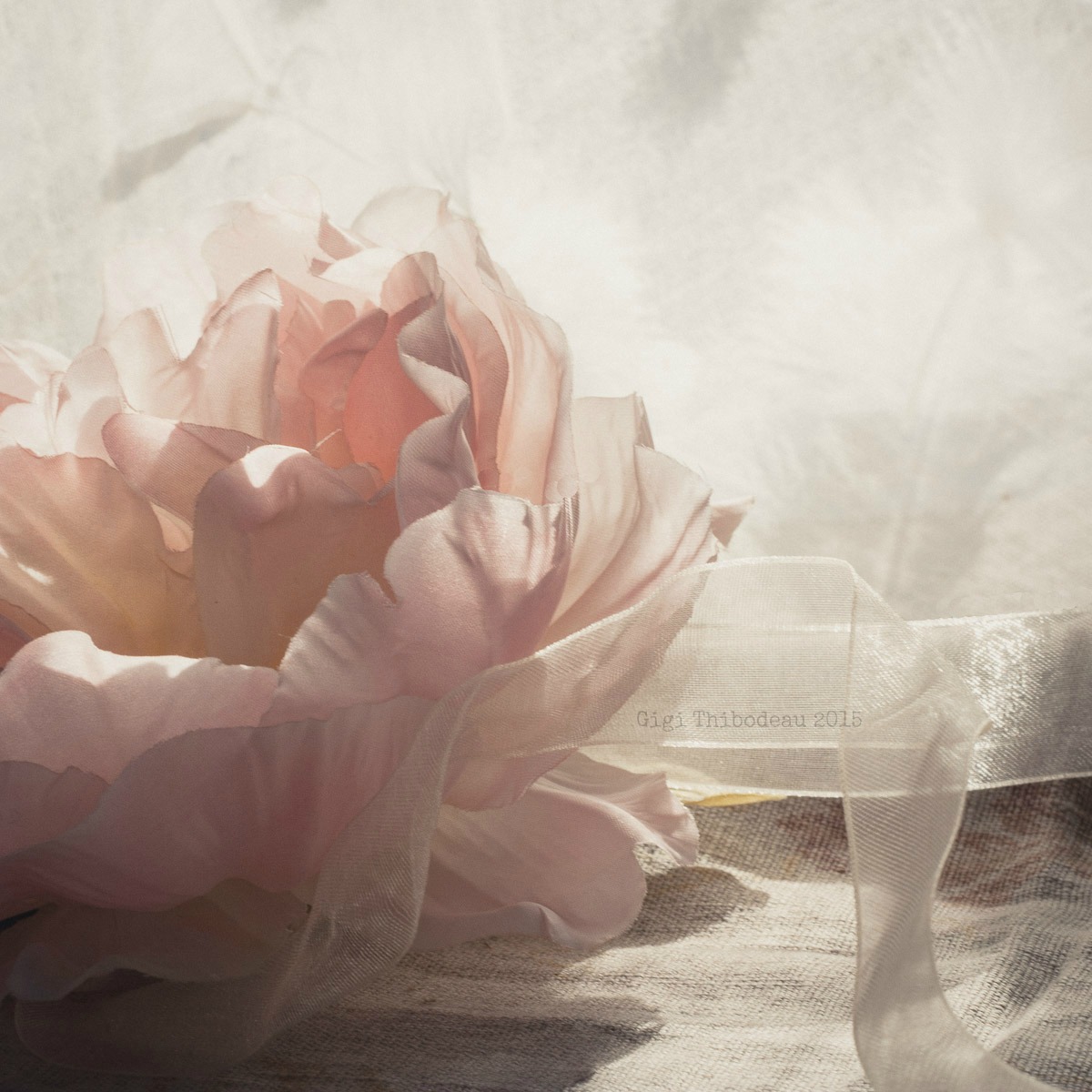
As some of you know, I've been working on a series of pictures that I'm calling my Dark Flower portraits.  The peonies above are one of the newest in the series.  I'll have news to share about the series in my next post, but for now, I'll just share some writing I did in an Instagram post that was inspired by this photo:

A gardener thinks about life and death always as one. In each flower's race toward blossoming is its race, too, toward decline. I'm saying nothing new, only that when you garden, this thought is always present. In the garden I am surrounded by the new growth of runner bean sprouts, the full flush of a climbing rose, and the last breath of a lush peony all at the same moment. My wheelbarrow is piled high with a day's kill: the weeds I pulled, faded blossoms I plucked, lily beetles I crushed between gloved finger and thumb. The gardener must not be squeamish about death. She must recognize its necessity even as she rejoices at the sight of her first ever iris uncurling itself with a flourish from the spear of its stem.


Not all of my recent photos have been dark.  In fact, some have been quite light and even ethereal. I'm taking nearly all of my stills in a northeast facing window of my little workroom/studio/study.  It provides my favorite light for stills.  I can't imagine taking photos without that northeastern light!


The peonies in the twilight shot above are only a few of the thousands to be seen and smelled at Gilsland Farm in June.  This old farm is home to the Maine Audubon Society, and it is one of my favorite spots anywhere in the world.  Meadows, woods, marshes, and lush gardens all in one magical place on an estuary just a few minutes outside of Portland, but truly a world away.


Clearly, peonies have been inspiring me over the past month, but so have many far less showy flowers right here in my own gardens, including the pelargoniums (geraniums).  In the shot above I tucked some lovely wild pink ones into a busted old crate.


The purple geranium in this final shot is one of Todd's favorite flowers.  It's combined with a wee sprig of lady's mantle in a handblown perfume bottle that a former boss gave me a lifetime ago. The Dark Flower portrait series is helping me to see photography--and thus my life--in a new way, and helping me come to terms with some things about the creative process (and the process of just living in this messy, heartbreaking, beautiful world) that have always frightened me.  I relish this chance to dive deeper and work harder.

Thanks, wonderful friends, for stopping by.  You never cease to inspire me.


Monday, October 19, 2015

Hard Frost


I knew it was coming.  I felt it before I'd even checked the forecast.  As the sun sank behind the pines last night, I scurried around the garden beds, gathering as many blossoms as I could to bring inside.  


So even though it pained me to look out the back window at the frozen gardens this morning, here in the house I had the small comfort of all my rescued blooms in vases and pots and pitchers.


Really I don't mind this turn to the darker months.  Here in Maine it is the best time to head to the woods or the beach or the mountain trails.  Soon the last of the leaf peepers will climb back in their SUVs and head for warmer states, and we will have all this beauty to ourselves again until next June.


And this turn outside means it's time for the turn inward, too.  Time for fires in the fireplace, candles on the mantle, cups of tea, and thick books to read.  I've piled up the warm blankets and taken my sweaters  out of storage.  And there's still plenty to do in the garden--bulbs to plant and leaves to rake and beds to prepare for the long, cold winter to come.     


Thursday, October 1, 2015

October


I have been a thousand miles away--for real and true.  There is much to tell, and I will, but for now there is October, the clear light it brings, and the days that disappear to dusk when I look away, when I take a breath, when I least expect.

Each leaf that shifts to gold on the maple outside my window is another blessing.  We will rake them, pile them out behind the shed, let them take their sweet time to turn to magic for the borders and the raised beds.  And there are bulbs for planting.  I'll haul out the barrow and the heavy spade, dig troughs for crocuses and daffodils.  There will be whole hills and mountains of snow between now and the next full bloom, but gardeners bank on hope, and October's sunlight gives just enough to keep me until spring.

Friday, June 12, 2015

Moody Me


Hello, my friends!  I can't begin to tell you how much I have missed being here on the blog this past month.  There I had made a big promise to post about our Brimfield adventures, and then I just fell off the map.  Two things happened: first, my little Brimfield post kept growing and growing into a big, all-encompassing flea market post.  Not unlike Brimfield itself, it started spilling out over the sides and becoming a little more than I could handle in just one brief post, so I've decided to develop it more and take my time with it.  Second, my life speeded up much faster than I had planned.  I have too much on my plate with work right now, and I haven't been able to keep up with, well, much else.  

But all that is boring.  All that matters is that I'm here now.  I managed to steal some time this week to do a still life shoot or two--woohoo!  The shot above is a vase I inherited from my Memere.  It's filled with purple and chartreuse posies from our gardens.  The backdrop is an old, beat up blackboard.  The fabric is a pretty scarf I bought in London at Spitalfields.  The lighting is my steady favorite--the moody north light I get coming through the window in my study/studio.  Have I told you before that this window is beside the bathroom door, so I end up doing a lot of shoots against that door, which often means blocking access to the bathroom for hours.  Good thing we have a second bathroom downstairs!

I was thrilled to discover this morning that the photo had been included by my amazing friends Kim and Aeleen in their #fouriadorefriday feature on Instagram.  You can take a peek at the beautiful grid they selected here.


This week here in coastal Maine we are finally having springish/summerish weather!!!  The sun is shining and the gardens are bursting with life.  I'm working in them whenever I have a moment to spare.  You'd think all my photos at the moment would be flooded with light and white and beachy sunshine, but I'm kind of loving dwelling in the darker, moodier realm right now.  The shot below is a "portrait" of Mr. Magpie.  Those who know him know why this is a portrait.  ;)

Sending a warm hug, lovelies!  More very soon.  xoxo Gigi


Saturday, May 16, 2015

Vintage Spring


Hello, chickadees!  Just stopping in to share some spring blossoms.  The crabapple is blooming in the front yard, and the lilacs and azaleas have just joined in, too.  Next up will be the viburnums and rhodies, and then the weigelas, mock oranges, and bridal veil spirea will follow not long after that.  

Life is a rush of activity this spring, but we did take one day to hit Brimfield Flea Market with our friend Kazeem, from Portland Trading Co.  I'll have some photos and finds to share soon!


My photo above was featured by DistressedFX on their Instagram feed and Facebook page this week.  If you haven't tried this app, I recommend it for photos that you want to really manipulate and push in exciting directions.  I use this app as well as Stackables to create moody effects for some of my iPhone photos.  I think I ended up using both apps on the top photo of the crabapple blossoms.  Before I used the textures, though, I upped the exposure and desaturated the photo a bit.  The background of that photo is my picnic table, which most people would think really needs a paint job, but I use it a lot for photos, so it will stay shabby chic a while longer.  ;)  

For photos I take with my big girl camera, I often use fewer textures and stick to subtler processing techniques in Lightroom.  I do some of that processing from scratch or with my own presets, but I also use presets by other folks, including this exciting new set from Kim Klassen.  Presets provide me with so much flexibility, and they give me ideas for creating several moods with one shot.  If you've never tried them before, take a peek at Kim's collection.  I think you will love it.

Vintage finds from Brimfield in the next post!  I have some exciting things to show you.  

Happy weekend, my friends! 

Tuesday, May 5, 2015

Dreams and Schemes


I've been working in the garden whenever I have a little spare time, which usually means early morning or just before sunset--the two most beautiful times of day.  We spread yards and yards of compost last week, and still have more to go on some of the beds, but I'm not rushing.  These are days meant to be savored.  As you an see, the fritillaria and 'thalia' daffodils are blooming this week, as are the primroses and grape hyacinths.  The tulips are just about to open, and in the woodland gardens, things like epimedium and lungwort are at their peak.

I've allowed myself to cut and bring inside just a few specimens for still lifes, as usual.  I always love photographing them, but I love them in the garden even more.  As much as I enjoy arranging large, elaborate bouquets (just wait until the dahlias and roses are blooming) I also love really simple clusters of flowers--not arranged at all, but just tossed in a dundee jar.  They say springtime to me.  In a couple of photos below, I've included my latest find, this sweet little watering can, which I bought at my friend Melissa's incredible garden-inspired shop here in Portland.  If you are ever visiting coastal Maine, a stop at Fiachre is a must!


Oddly enough, I had begun taking some shots of the watering can and flowers over the weekend, and then I saw my friend Kim's latest prompt in the Online Studio: Potting Bench!  Well, that was an easy one, since my shots already looked like potting bench-inspired photos.  As I took these, I thought a lot about my plans for the garden this year.  In the photo below, you'll see that my gardening journal is opened up to a page I sketched our first fall in this house.  Nothing really ended up as I'd planned it, of course, but that's not the point.  I love dreaming and scheming, and discovering surprises along the way.  Among the surprises in the garden this spring are the lady's mantles that have self-seeded, which I was hoping they'd do, but you can never plan for these kinds of happy accidents.  I'm also excited to see that the lilacs, which I've trimmed back hard for two years, are looking the best they've been yet.  Soon there will be blooms to share.

Have I told you that I'm devoting one of the raised beds to nothing but cutting flowers this year?  I can't wait to see how it turns out, but in the meantime, I am loving the elegant fritillaria, with their little checked blossoms, hanging like plum bells beneath the wings of the white daffodils in the early morning light.


Monday, April 20, 2015

April Rains--A Garden Update


The April rains have come, and with them the green and red buds on the trees.  Out in the garden we've had crocuses--then snow--then then more rain and even more crocuses, sprinkled with some snowdrops.  We have raked and tidied the beds, made way for the grape hyacinths, the buds of which are tinged with purple at their edges.  The tulips are midway up, as are the daffodils and fritillaria.  The lady's mantle are everywhere, pushing up their tiny pleated fans through the soil, and the pulmonaria are showing off their polka-dotted leaves.  I've even caught sight of the first secret frills of red where the bleeding hearts grow at the edge of the woodland border.  Out along the edges, the shrub border is filling with color--the red twig dogwoods and the Hakuroo-Nishiki willow are scarlet red, covered with buds.  I'm thrilled to see that all the hard cutting and pruning I've done on the lilacs these last two years is paying off.  They are looking stronger than ever--and they are loaded with buds.  


Chores for the coming couple of weeks include dividing some of the day lilies and spreading the three yards of compost that we're having delivered this weekend.  No bed will be left out.  Everyone will get a top dressing to start the growing season with a bang.  I'll also be starting many, many flower seedlings for the new cutting garden I'm planning to grow in one of the raised beds this year.  And then there are the dahlias.  They will be emerging from their winter sleep down in the cellar.  I'll chit them out until the soil is warm enough to put them in.  For the past couple of seasons I've mixed them in with other plantings, letting them grow with all the other flowers.  This year I think they may get their own bed.  We shall see.


Spring came late here in the Maine this year, but now that it's here, every plant seems to be rushing to put on a show.  I am relishing these cool days, especially the ones when the sun puts in an appearance.  It's too cool yet for the mosquitos, so we can just be out there in the mud, spreading grass seeds, trimming limbs, and dreaming up new garden plans.  I hope your spring is shaping into a beautiful one. If you garden, I'd love to hear what is blooming right now and what you're up to in your garden.  More soon--plus pictures of the early spring garden!


Tuesday, March 10, 2015

What's Inspiring You?

See that light shining through the cheesecloth in the back of this shot?  That's honest-to-goodness sunlight!  Yes!  Daylight savings did not disappoint.  I was able to set up and take many, many still life shots all Sunday afternoon while the sun poured in through this upstairs southwest window. This particular photo is for a backlit assignment in Kim Klassen's Be Still--52 class.

I want thank the many folks who tried my lemon cookie recipe over the weekend!  I received loads of notes on Facebook and Instagram, comments here on the blog, and emails and texts about the cookies.  I'm so glad that you all love them as much as I do!  They are about as easy to make as cookies get, and the taste payoff is extraordinary.  I even saw photos of some other people's cookies, and they were gorgeous!  Nothing like bonding over baked goods.  It truly takes a village to bake a biscuit.

I'll have more recipes very soon.  In the meantime, I wanted to share a few inspiring links:

~Click--A print and digital magazine by photographers for photographers.  These women make a seriously gorgeous product.  Plus, they're running a fun photography contest from now until April 15.  Get clicking!

~Sarah Raven--This is a link to her YouTube channel.  I learn so much from her gardening videos.  Champion of heirloom varieties, she is a gardening goddess . . . and a brilliant teacher.  Plus, just getting to peek at the grounds of her farm makes me want to try new ideas in my own little piece of earth.  

~Thomas McGuane--This link will lead you to an NPR interview with Montana writer Tom McGuane.  Mr. Magpie heard the interview yesterday, told me about it over a quick lunch at Becky's Diner today, and I've just been listening to it and reading the transcript tonight.  It's definitely a worthwhile listen, especially for fellow readers and writers.  "I think there's only one interesting story," says McGuane, ". . . and that's struggle."  I have to say, after years of writing and teaching writing, I agree.

If you have a moment, let me know what's inspiring you this week.  I'd love to hear what you're up to.  

Monday, March 2, 2015

Hope and the Garden


Happy March, my friends!  For all my moaning about this winter (it turns out this has been the coldest February on record in Portland, Maine, and among the snowiest winters), I do love the light in March.  It gives me hope, and hope makes me dream about my garden.

I have ordered my flower seeds from Johnny's, as I plan to grow a cutting garden in one of the raised beds this year.  It will have as many zinnias as I can fit in shades of salmon pink, raspberry, and charteuse, as well as cosmos, nigellas, and so many other beauties. 

Right now, those beds are so deeply buried that they don't even make mounds in the snow, but I know they are there, waiting.  And the roses and lavender and black-eyed Susans in the perennial beds are, too.  


And then there are the hydrangeas.  I have lots and lots of them all around the gardens, and I cut loads of blooms to dry for the winter.  They keep me going until the first crocuses and snowdrops appear where I planted them in the grass.  Most years those early bulbs begin to bloom in mid to late March here in coastal Maine, but I think it will be April this year.  Spring will be short, but with all this snow, the ground will be wet, too, which means it will likely be lush.


I've got lots of veggies in mind.  I always grow tomatoes, lettuces, runner beans, radishes, peas, and lots of herbs.  This year I think I'm going to grow potatoes, too.  Let me know what else you think I should try.  What have you had good luck growing?


I'm thinking of you all and wondering how you're faring.  For those of you in the Northern Hemisphere who are at the tail end of winter, have you started planning your gardening season yet?  I'd love to hear what you'll be planting.  I'm also curious about when the growing season actually begins for you.  I think here in Maine we're kind of towards the extreme end of things in that our winters are long and very cold and our growing season is very short.  I'm always amazed by how much we actually get to grow in about half a year's time!  And, yes, for those who have asked me in past posts or on Instagram, yes, I would LOVE to have a greenhouse.  Maybe some year soon I'll have one.  Anything to give me more time with the plants. 

In the meantime, I'm loving the sunlight and the little spark of hope it lights in me for another season of green.

xo Gigi

P.S. Last week The Magpie's Fancy passed its 6-year mark.  I can hardly believe I've been blogging here for all these years.  Thank you for making it such a joy.

Wednesday, November 5, 2014

Giveaway Winner and the Garden in November


I'm thrilled to announce that the winner of the Artful Blogging Giveaway is Susan from Windrock Studio!  Thank you to everyone who entered, and to those who sent emails and notes as well!  You are what makes blogging matter to me, and I'm so grateful that we found each other.

These photos are of the last few marigolds that I gathered from my garden yesterday as Mr. Magpie and I raked and began putting the gardens to bed for the winter.  We've had flowers blooming up until the snowstorm (yes, snowstorm) that hit us over Halloween weekend, so I've been hesitating to really clean up the beds or cut anything back.  Besides, I tend to leave as much as possible to overwinter as it stands so that the birds will have seed heads for eating. Plus, I love the look of the browning stalks as the snows begin to come.  I believe winter gardens have an austere beauty of their own.

Still, it's fun to gather up armfuls of the last annuals and the last herbs for drying, so I brought in huge bunches of beauties yesterday, and these marigolds just looked especially marigold-y against our newly painted bedroom floor, so they got to feature in a mini photo shoot.


As I worked in the garden, I remembered a poem by Jane Hirshfield that I love, so I thought I'd share it with you here:

November, Remembering Voltaire

In the evenings
I scrape my fingernails clean,
hunt through old catalogues for new seed,
oil work boots and shears.
This garden is no metaphor –
more a task that swallows you into itself,
earth using, as always, everything it can.
I lend myself to unpromising winter dirt
with leaf-mold and bulb,
plant into the oncoming cold.
Not that I ever thought the philosopher
meant to be taken literally,
but with no invented God overhead
I conjure a stubborn faith in rotting
that ripens into soil,
in an old corm that flowers steadily each spring –
not symbols but reassurances,
like a mother’s voice at bedtime
reading a long-familiar book, the known words
barely listened to, but bridging
for all the nights of a life
each world to the next.

Jane Hirshfield, from Of Gravity & Angels, 1983


More soon, my friends.  xo Gigi

Wednesday, September 17, 2014

Autumn, Bloomsbury, and Other Inspirations


Since last week's post, I took a quick trip down to South Carolina to visit my big brother.  As we sat on the pier that extends from my brother's back yard into a glorious tidal marsh full of oysters and sea birds, the temperature rose above 100 degrees Fahrenheit.  There's not enough sweet tea in the world to cool me off once it's above 95.  My body and brain were fooled for a few days into thinking that summer was far from over.

A glorious sunset at the end of a sweltering South Carolina September day.


Then I flew back north to Maine and stepped off the plane into--shiver--50 degrees and rain.


That's okay, though, because as I said last week, autumn here means dahlias and asters and still more tomatoes, at least until the frost.  It also means that it's almost time to begin planting bulbs for spring.  Last year I planted white 'Thalia' daffodils that grew beautifully in our little woodland border, along with fritillaria meleagris and alliums of various shapes and sizes.  This year I'm turning to my small library of gardening books for ideas about what bulbs to plant.  As much as I love blogs, websites, and Pinterest, when I need garden inspiration, there's no substitute for flipping through the pages of my favorite books.  In particular, I'm always interested in anything to do with English gardens, especially Bloomsbury gardens. Here's the book I've put on my wish list this fall: Virginia Woolf's Garden by Caroline Zoob with photography by  Caroline Arber and a Foreword by the wonderful Cecil Woolf.  

Available here.
Speaking of Bloomsbury and all things domestic and beautiful, Mr. Magpie and I had the great pleasure of reviewing two books for the Spring 2014 Issue of  The Virginia Woolf Miscellany a few months ago.  If you click on the link, you'll find our review on page 36 of the online pdf version of the journal.  It was a joy to discuss Virginia Wolf, a lush and heartfelt children's picture book by Kyo Maclear and Isabelle Arsenault, as well as The Charleston Bulletin Supplements, an edited collection of a series of "supplements" co-authored by Virginia Woolf and her nephew Quentin Bell in the early 1920's.  The collaboration between Woolf and the then 12-year-old Bell is a humorous and entertaining chronicle in pictures and words of the daily life at Charleston Farmhouse, the Sussex home of Virginia's sister, Vanessa Bell, Duncan Grant, Clive Bell, and as we state in our review, "a motley band of Bloomsbury bohemia engaged in disciplined creativity, strenuous play, and the daily practice of crafting life together" (36).  Some of you know that Mr. Magpie (aka Todd Avery) is a Bloomsbury scholar, and that Charleston Farmhouse is a touchstone for us--a place to connect with the things we value most about art, friendship, and living an ethical life.  If you'd like to learn a bit more about Charleston Farmhouse, visit the post I wrote after my first visit there a few years ago.

And for some quick visual inspiration, scroll down through this post for a few shots I took late last summer on a very cloudy day in the garden at Charleston:


I will soon have other publishing news, but in the meantime, click here at the Lilly Library's page to read Close and Affectionate Friends, a beautiful, small book that Todd wrote back when he was completing his PhD at Indiana University.  He curated an exhibition on Bloomsbury at the Lilly in 1999, and he wrote this book on Desmond and Molly MacCarthy to accompany the exhibition.  At the time it was only available as a printed book, but now you can read the e-version for free.


Todd has written and edited many articles and chapters, along with other books on Bloomsbury and Modernism since then, including Radio Modernism, which a review in the Woolf Studies Annual calls a "compact but meticulously sourced and argued volume," and Unpublished Works of Lytton Strachey, published by Pickering & Chatto. He has also penned two volumes--one published and one forthcoming--for Cecil Woolf Publishers' Bloomsbury Heritage Series, which you can read more about in the 'Books' section of Blogging Woolf.

It's not often that I allow myself to sing the praises of Mr. Magpie here on the blog, but I admire his work tremendously, and I love when we have the opportunity to collaborate on a project.  We are currently co-writing another book review, and yes, it is Bloomsbury-related, so I will keep you posted about it in the coming months.

I have so much to share with you--more Italian gardens, more Maine gardens, books I've been reading, and food I've been cooking.  As always, I'm grateful to you for visiting, and I love hearing about the daily ins and outs of your life, too.  Thank you for always inspiring me.  xo Gigi


Sunday, September 7, 2014

The Edge of Autumn


Good morning, chickadees.  I was out working in the garden earlier, deadheading the Abraham Darby roses, weeding the raised beds, gathering ground cherries to make salsa, and harvesting scarlet runner beans for next year's seeds--and I thought of you.  As I worked, the sun warmed my skin without burning.  I looked up to see the bees hopping from the fennel to the bee balm to the anise hyssop.

The last daisies are opening and the phlox is nearly all gone by.  Even so, the dahlias are just beginning to hit their stride, the asters are on the verge of blooming, and the chocolate eupatorium has yet to even start.  We've a ways to go, and even though I know the frosts will come in another month, I can't help but love this very moment in the garden best.  Here, teetering on the edge, I savor every bit of September's sweetness as the tomatoes blush and the whole garden gives one last glorious push before the fall.


Wednesday, September 3, 2014

Gardens of Florence


Earlier this summer I shared my visits to two gardens in Salerno, Italy.  I've been promising Florence, and at last I am delivering.  As we head into September and the first leaves have already begun to fall, I find myself longing for springtime in Italy.  For now, these photos will have to suffice.  

Have I told you yet that I fell head over heels in love with Florence?  I know this is nothing new.  Everyone loves Florence.  As Mr. Magpie and I window-shopped the jewel-box boutiques that line the crowded Ponte Vecchio, we had to pinch ourselves.  We were finally in Florence, the city I've wanted to visit since I was an 8-year-old girl poring through the pages of my parents' coffee table books of great museums of the world.  The Uffizi and Florence itself were at the top of my list in those days, and  they stayed at the top through all the years since then.  

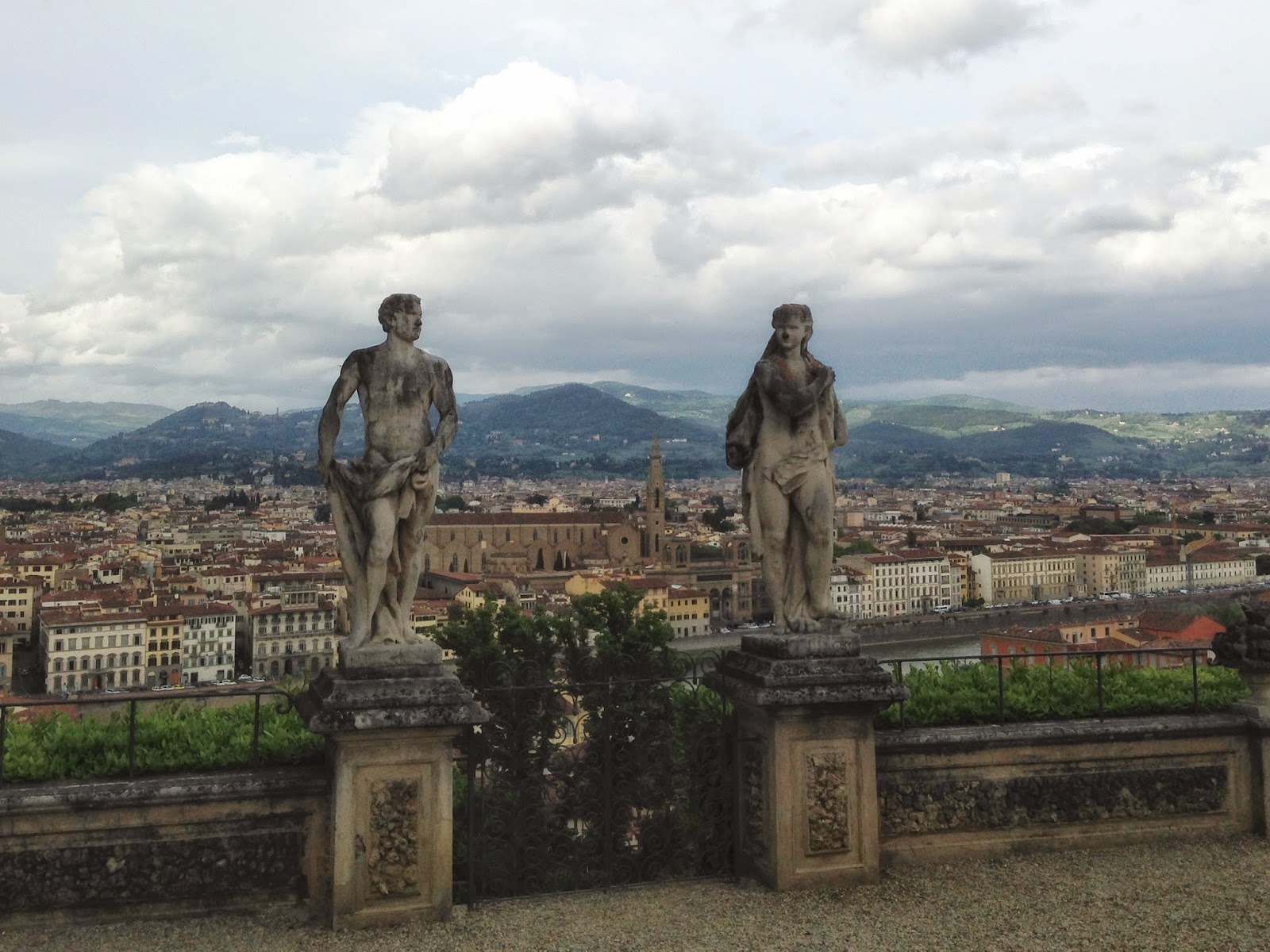
I am happy to say that neither the museum nor the city disappointed.  We stayed just south of the Arno, one block from the Palazzo Pitti and the famed gardens of the Medici, the Giardini di Boboli.


The Boboli Gardens are the epitome of formal 16th-century Italian landscape design, yet they also incorporate several elements that were unique at the time, including sweeping views of the city and the countryside beyond in the neighboring hills. 


These views are largely the result of the steep topography of the site.  A broad gravel boulevard (Viottolone) lined by cypress trees climbs the hill.  


Smaller lanes along the Viottolone lead off to more private spots in the gardens, often decorated by remarkable sculptures, like this colossus bust of Zeus.  


With grottoes, sculptures, and fountains spanning the 16th and 17th centuries, as well as some from antiquity, the gardens are truly an open-air museum.

As you can see, it was a grey day when we were there, but warm, and the peonies were in full bloom.

In the view below, we are facing the Pitti Palace from the gardens.  


While they are open to the public today, when the Giardini di Boboli were originally laid out in the mid-16th century for Eleonora di Toledo, the wife of Cosimo I de Medici, they were intended as private family gardens.     


If you have time when visiting Florence, I recommend climbing a little higher up above the Boboli Gardens past the Forte Belvedere to the Giardino Bardini, with its beautiful rose gardens and yet even more sweeping vistas of Florence.


The roses at the Bardini are exquisite.  

It's difficult to limit this post to just one more garden, but I must or it will never be finished! Below I want to share with you a few shots I took on a different day when Mr. Magpie and I wandered over to the university district just north of the tourist center of Florence (it is a small city, so walking is very easy).

We went in search of the Orto Botanico, or as it is commonly called, the Giardino di Semplici (Garden of Simples), meaning medicines obtained from single plants.  Pharmacists traditionally make compounds, but a simple is one plant used to treat an ailment.

Founded in the mid-16th century, also by Cosimo I de'Medici, this is the third oldest botanical garden in Europe. 

Rosa 'Edgar Degas'


There are more than 9,000 specimens in the Orto Botanico, but what I love most are the many, many roses.

Curry plant


I also loved touring the old glass houses, filled as they are with surprising specimens.  It's not a large botanical garden, and it won't take more than a couple of hours to view, but I found it to be a peaceful respite from the madness of the tourist crush near the Duomo.  Plus, some of the plantings are truly inspiring displays of contrasting textures and colors.

Rosa 'Sally Holmes'

Rosa 'Clair Matin'


At the edge of the gardens, near the public restrooms, we found the storage area for the hundreds of pots used to display specimens.  Wish I could have brought a few of these beauties home with me.  Each one is between two and three feet tall.  

Rosa 'Pink Grootendorst'

This sweet little rose with petal edges that look like someone cut them with a pair of pinking shears was tucked away in a corner.  Happily, I researched it when we returned home and discovered that it's hardy to zone 4, so I think I need one for my Maine garden! 

One little side note, while I haven't included photos of them, when you're at the Orto Botanico, you will likely meet the resident cats who are taken care of and well housed there--one more thing that makes this place near and dear to my heart. 

I hope you've enjoyed this very mini and very whirlwind tour of three Florentine gardens.  I have two more very special Italian gardens to share from Verona and Rome--be looking for them soon.  In the meantime, my own roses and dahlias are blooming up a storm, so I'll have pictures of my little plot to share, too.  If you want a sneak preview, you can always check out my Instagram feed here (or click on the little icon on my sidebar). 

I have lots of surprises in the works in the coming months.  In the meantime, thank you so much to old and new readers alike!  Your comments, emails, and Facebook notes are a joy to read.  I haven't been blogging as regularly this year because I've been working so much on deadline with clients as well as with my own writing and photography projects, so I thank you all for hanging in there with me while the cupboard was a bit bare.  You are the best